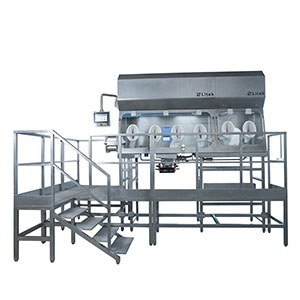
RABS: Everything You Need to Know
Restricted Access Barrier Systems (RABS) are an effective solution for preventing contamination in aseptic manufacturing environments. They have become widely adopted across the pharmaceutical industry due to their ability to significantly reduce the risk of microbial contamination while maintaining operational flexibility.
These systems provide a high level of separation between operators and the aseptic environment inside the enclosure. By combining a physical barrier with unidirectional airflow, RABS limit direct human intervention during manufacturing processes, making them a reliable and cost-effective solution for controlled production in sterile environments.
What Does RABS Mean?
RABS stands for Restricted Access Barrier System. Its primary function is to prevent contaminants from entering the critical processing area by acting as a barrier between operators and the aseptic manufacturing process.
As a result, RABS are considered an effective control measure for ensuring product quality while maintaining high safety standards in sterile manufacturing operations.
Each RABS installation is designed according to the customer’s specific process requirements and the applicable regulatory framework governing aseptic manufacturing.
Classification of RABS
Restricted Access Barrier Systems can be classified into two main categories:
Open RABS
Open RABS can be either passive or active:
- Passive Open RABS: Utilize the cleanroom’s existing ventilation and filtration system.
- Active Open RABS: Incorporate a dedicated air handling system independent of the cleanroom air supply.
Closed RABS
Closed RABS feature a dedicated air handling system, typically based on recirculated and HEPA-filtered air, providing a higher degree of environmental control and contamination protection.
Applications
To enhance product protection while safeguarding operator health, RABS are increasingly implemented across a wide range of pharmaceutical manufacturing processes.
Typical applications include:
- Containment processes, where products exhibit a certain level of toxicity and operator exposure must be minimized.
- Aseptic processes, where maintaining product sterility is the primary objective and protection against contamination is critical.
- Combined aseptic and containment processes, where both product sterility and operator protection are required simultaneously.
These applications are commonly found in pharmaceutical manufacturing facilities and laboratory environments.
Advantages of RABS
RABS offer numerous benefits, including:
- Enhanced product protection through the creation of a physical barrier around critical processing areas.
- Reduced risk of microbial and particulate contamination.
- Compliance with the stringent requirements of aseptic processing.
- Improved operator safety.
- Increased process reliability and product quality.
- Cost-effective implementation compared with fully closed isolator systems in certain applications.
Overall, RABS provide an effective means of ensuring product quality and improving safety in aseptic manufacturing environments.
The Evolution of RABS in the Pharmaceutical Industry
Restricted Access Barrier Systems have become an essential component of modern pharmaceutical manufacturing due to their ability to maintain microbiological integrity during the production of sterile products.
As demand for high-quality pharmaceutical products continues to grow and regulatory requirements become increasingly stringent, RABS have emerged as a key technology for minimizing contamination risks in aseptic production processes.
Technological Innovations
Over the years, RABS technology has undergone significant advancements.
Modern systems now incorporate sophisticated real-time monitoring technologies capable of dynamically adjusting operating conditions based on critical environmental parameters. They also feature automated detection of viable and non-viable particles, enabling rapid identification of potential contamination events.
In addition, improvements in airflow management have enhanced operational efficiency while ensuring that the critical process environment remains compliant with sterile manufacturing requirements.
Adaptability and Customization
One of the key advantages of RABS is their adaptability to a wide variety of operational requirements.
These systems can be customized to meet the specific needs of individual production facilities, whether for new manufacturing plants or retrofit projects within existing facilities.
Their flexibility allows seamless integration into complex manufacturing processes requiring stringent control of sterility, containment, or both. This adaptability makes RABS a strategic investment for improving operational efficiency and process safety.
Regulatory Compliance
The pharmaceutical industry operates under strict regulations that demand high standards of quality, safety, and efficacy.
RABS are designed to support compliance with regulatory requirements established by agencies such as the FDA and the EMA. They help manufacturers maintain effective control over microbiological contamination and other process-related risks throughout production.
This compliance not only protects product quality but also contributes to patient safety and supports adherence to Good Manufacturing Practice (GMP) guidelines.
Personnel Training
The effective operation of RABS requires highly trained personnel.
Operators must be qualified to manage and maintain these sophisticated systems, ensuring compliance with all safety and hygiene requirements. Ongoing training is essential to maximize system performance and minimize the risk of operational errors that could compromise product sterility or process integrity.
Manufacturers should invest in continuous training programs to ensure that personnel remain current with technological developments and industry best practices.
Looking to the Future
While Restricted Access Barrier Systems remain a proven and effective solution for sterile pharmaceutical manufacturing, the future of aseptic production is clearly moving toward highly automated and robotic isolator technologies, where human intervention is minimized—or eliminated altogether.
Although further technological developments are still required to achieve widespread implementation, isolators are expected to become the preferred solution for aseptic manufacturing over the coming years.
This trend is driven by the significant advantages isolators offer in terms of microbiological control, product quality assurance, and, ultimately, patient safety.
As pharmaceutical manufacturing continues to evolve, both RABS and isolator technologies will play critical roles in advancing sterile production processes and meeting the industry’s increasingly demanding regulatory and quality requirements.